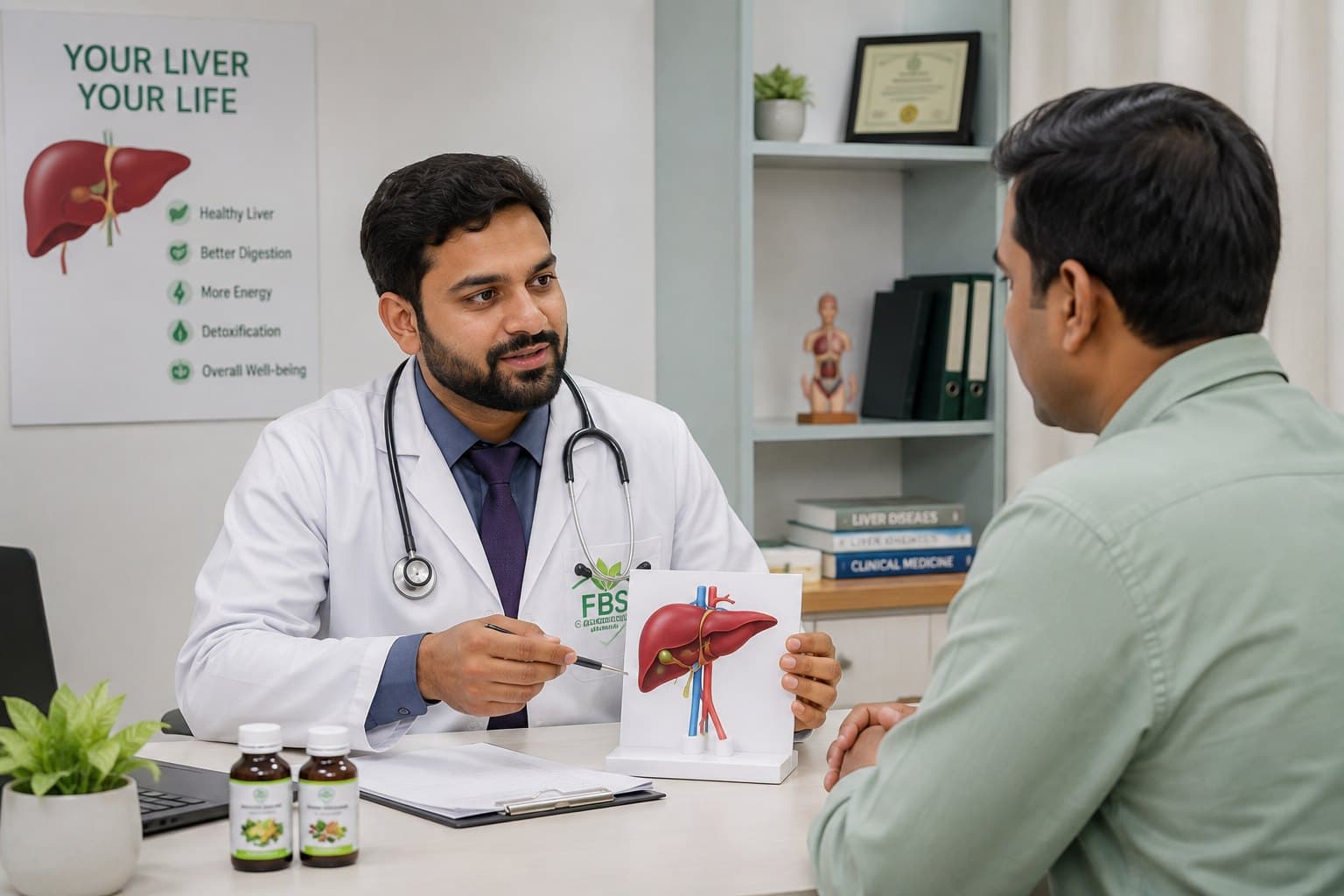
Most people meet the words 'fatty liver' on a report they were not expecting. An ultrasound done for stomach pain or a routine health check comes back mentioning grade 1 fatty liver, and there is rarely time in the appointment to explain what that means.
The short version: it describes how much fat the scan can see in your liver, not how much damage has been done. Those are different questions, and the second one matters more.
What the grades describe
Grading is a visual estimate of how bright the liver appears on ultrasound compared with the kidney next to it. Grade 1 means mild fat accumulation, grade 2 moderate, grade 3 marked.
It is a useful starting point but an imprecise one. Two people with the same grade can have very different liver health, which is why the grade is always read together with blood tests.
The numbers worth watching
Alongside the scan, three things give a fuller picture:
- SGPT (ALT) and SGOT (AST) — enzymes that rise when liver cells are irritated
- Fasting blood sugar and HbA1c — because insulin resistance and fatty liver travel together
- Triglycerides — often raised in the same pattern
What actually moves the needle
In the early stages, the liver responds well to sustained change. Losing five to seven percent of body weight gradually has been shown to reduce liver fat measurably. Not through crash dieting — rapid weight loss can make matters worse.
The practical version is unglamorous: fewer sugary drinks and fried snacks, more whole grains and vegetables, a brisk walk on most days, and no alcohol while the liver is recovering.
When to get help sooner
Book a consultation rather than waiting for the next routine check if you notice yellowing of the eyes, swelling in the legs or abdomen, or persistent pain in the upper right abdomen.